Plateau
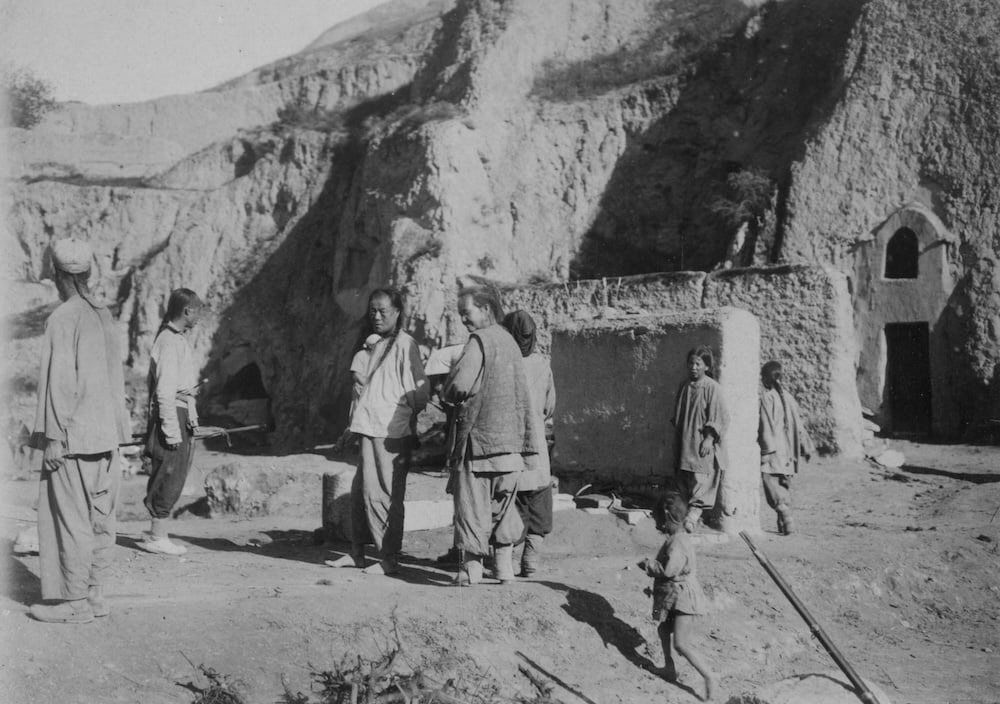
Cave dwelling near Yan’an, Arthur de Carle Sowerby (1885–1954)
Almost a century ago, Mao Zedong ended up in northern China with the haggard remainder of the Red Army that had survived a yearlong, 10,000-kilometre military retreat. There, he began to contemplate the near-complete collapse of their movement. They settled in Yan’an, a town on a dissected plateau formed of dust blown in from the desert and dry basins of central Asia. As the wind meets the uplands around Yan’an, it slows, and much of the dust it bears falls down, compacting over millennia into loess, a sediment whose grains cohere in a loose but self-supporting fashion. This means loess, though soft enough to excavate by hand tools, can form sheer cliffs and remain standing when cut. Thanks to this unusual quality, Yan’an is dimpled with cave-houses. When Mao arrived in 1937, he dwelled in the side of a valley whose carved-out slopes also held a library, a hospital, and the headquarters of the Communist Party. Mao tended vegetables outside his home. He read. He chain-smoked. For ten years he watched the river coursing through Yan’an, yellow with sediment suspended in its waters, sediment that would be carried for thousands more kilometres to the distant sea.